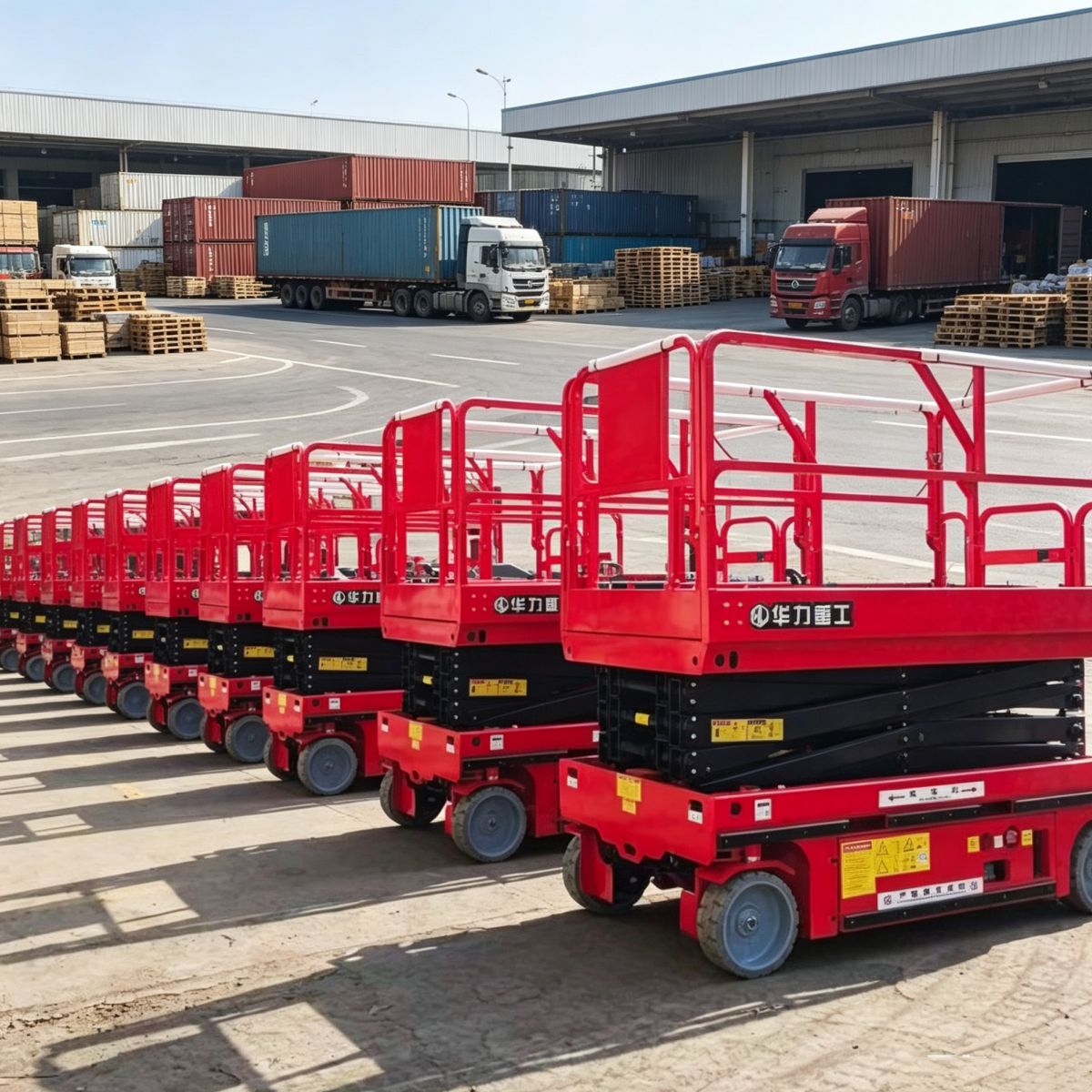

Field crews prioritize rough terrain scissor lifts above other aerial gear for one simple reason: unbeatable off-road capability. Equipped with heavy-duty deep-tread tyres, ample ground clearance and robust 4-wheel drive systems, this scissor lift navigates muddy, gravelly and uneven ground with zero hassle. Standard lifts often get stuck or slip on rough terrain, causing frustrating work delays, but this equipment stays stable on mild slopes and rugged surfaces. It delivers consistent mobility on undeveloped sites, keeping daily construction workflows running smoothly without unnecessary downtime.
Safety is always the top priority for outdoor elevated work, and terrain-ready scissor lifts excel in this area. Most models come fitted with self-leveling outriggers and a reinforced heavy-duty chassis, designed specifically for erratic outdoor ground conditions. The machine automatically balances itself on uneven surfaces, keeping the work platform firm and stable at height. Whether crews are installing exterior building facades, assembling steel frameworks or completing field repairs, there's minimal wobble or tilt risk. Fully compliant with industry safety standards, it offers far better protection than traditional manual lifting gear on busy outdoor job sites.
On-site usability and real-world efficiency set this outdoor scissor lift apart from generic alternatives. It boasts a spacious working platform with impressive load capacity, giving multiple workers enough room to operate simultaneously alongside their tools and materials. Many units also feature an extendable deck, which expands the working area and cuts down on frequent repositioning. Built to withstand long hours of heavy-duty outdoor use, it holds up well to the rigorous, non-stop workflow of residential, commercial and civil construction projects.
For contractors and on-site engineering teams, rough terrain scissor lifts are a smart, budget-friendly investment. They solve the most common headache of standard aerial equipment - inability to perform on rough, unpaved outdoor terrain. Beyond better terrain adaptability, they upgrade job site safety and drastically improve overall work efficiency. Less equipment downtime, fewer on-site obstacles and faster task completion all combine to lower long-term operational costs, making them an essential piece of kit for any outdoor elevation work.