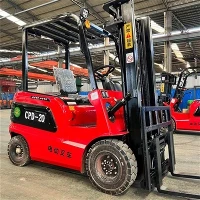

Electric forklift batteries come in two types: lead-acid batteries (maintenance-free, water-cooled) and lithium-ion batteries. While choosing a forklift battery isn't complicated in terms of battery type, other factors often make the decision difficult! These include: capacity, charging speed, cycle life, brand, and price. Choosing the right battery is crucial for the company's subsequent production operations, making the selection of the correct forklift battery paramount.
Environmental protection is a widely advocated issue. With advancements in lithium battery materials, lithium-ion batteries offer increasingly prominent advantages in electric forklifts, such as fast charging and long lifespan. Currently, most electric forklifts on the market use lithium-ion batteries, although lead-acid batteries are also used. So, what are the advantages of using lithium-ion batteries in forklifts compared to lead-acid batteries?
Compared to lead-acid and nickel-cadmium batteries, lithium-ion batteries do not contain polluting elements such as cadmium, lead, and mercury, making them harmless. During charging, they do not produce the "hydrogen evolution" phenomenon seen in lead-acid batteries, and they do not corrode the wire terminals and battery casing, making them environmentally friendly and reliable. Lithium-ion batteries boast over a thousand cycle times and a lifespan of 3-5 years. They exhibit no memory effect and require no frequent replacements.
Lithium-ion battery packs feature an intelligent BMS (Battery Management System) that automatically cuts off the main circuit in case of low battery, short circuit, overcharge, or high temperature faults. Data is fed back to an app, allowing users to monitor battery status in real time. More intelligent forklift lithium battery systems also include a high-temperature warning – features traditional lead-acid batteries lack. They support fast charging and require minimal maintenance. For specialized industries such as warehousing and logistics, and airport cargo, lithium batteries can be charged in "fast charging mode," fully replenishing the battery in 1-2 hours to maintain vehicle full load and uninterrupted operation. Furthermore, once the lithium battery is packaged, no further special fluid filling or periodic discharge is required.