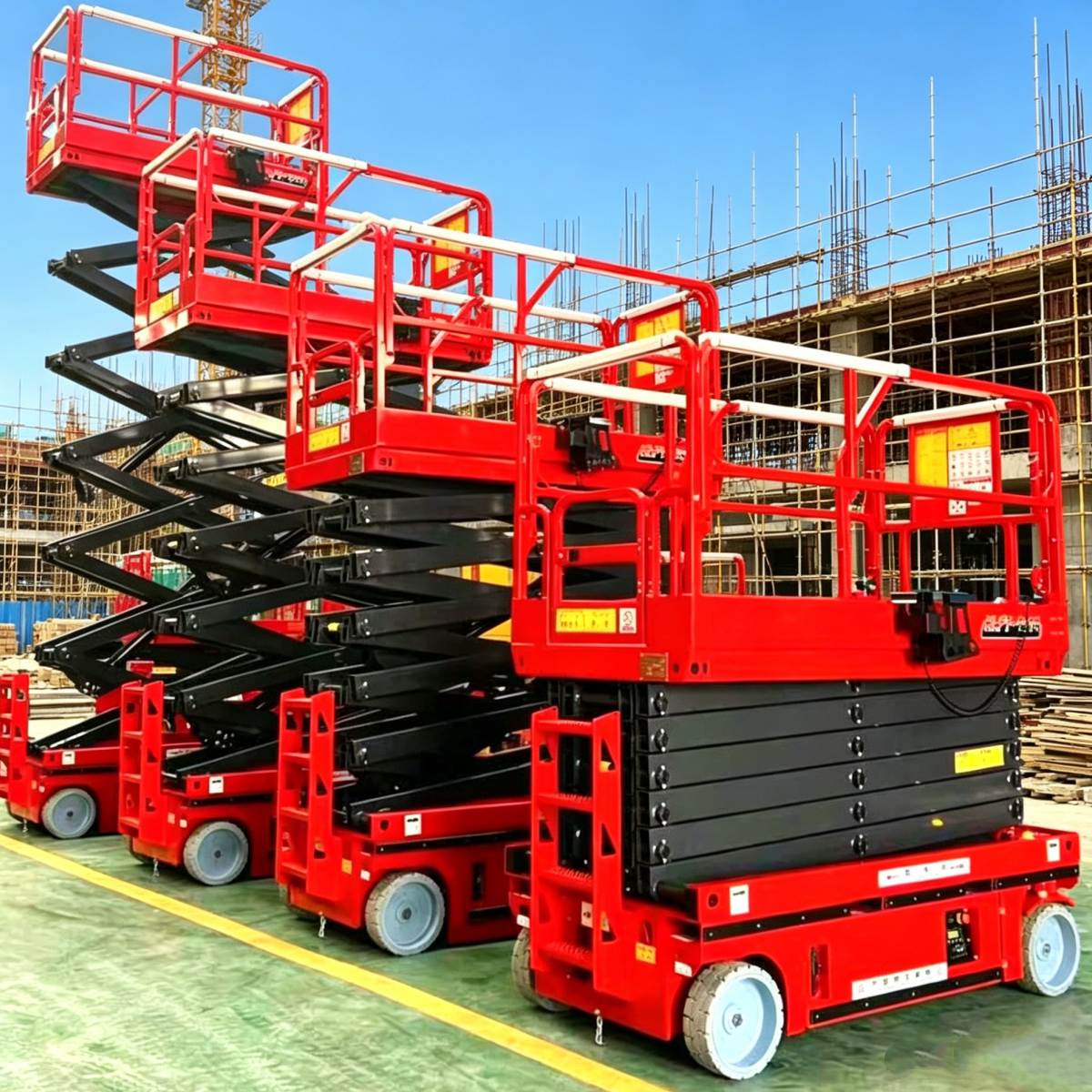

When talking about scissor lift batteries, there are two key lifespans people actually care about: how long they run on a single charge, and how many years they'll hold up in regular use. For most standard electric scissor lift batteries, you'll get 4 to 8 hours of active working time on a full charge. That's based on typical light to moderate use - things like indoor maintenance, sporadic lifting tasks, and slow, short-distance movement around a job site. Heavier, nonstop work will cut that run time down noticeably.
In terms of overall service life, traditional lead-acid scissor lift batteries - the kind you'll find on most standard rental and fleet lifts - usually hold up for 3 to 5 years with decent upkeep. If you're running the lifts hard every single day for commercial jobs, expect that to drop to 2 to 3 years. Skip basic maintenance, leave batteries discharged for weeks, or run them dry constantly, and you might be replacing them in under two years. On the flip side, newer lithium-ion scissor lift batteries hold up far better, commonly lasting 5 to 6 years with regular, proper use.
A lot of everyday job-site conditions affect scissor lift battery lifespan and daily run time. Temperature is one of the biggest culprits most operators overlook. Working in frigid cold weather absolutely kills battery capacity - it's normal to lose 30% or more of your usual run time on freezing days. Meanwhile, consistent extreme heat wears down internal battery cells faster, slowly ruining the battery's long-term durability over time.
Your charging routine makes or breaks your battery's lifespan. Draining your scissor lift batteries all the way down to empty on a regular basis is the fastest way to burn them out early. Most field crews learn the hard way that letting equipment sit with dead batteries for days or weeks while idle ruins cells permanently. Overcharging is just as harmful - it wears down the battery over time and leaves you with shorter daily run times no matter how full you charge it.
How you use your scissor lift day-to-day also changes battery performance. Constant full-height lifting, nonstop driving across rough terrain, and back-to-back heavy-duty tasks burn through power much faster. That means shorter run times per charge and gradual long-term wear on your batteries. Lighter, sporadic use with regular breaks always helps batteries last longer both per shift and over their total service life.
Basic, consistent upkeep is the simplest, most effective way to extend scissor lift battery life. For lead-acid models, take time to check fluid levels routinely, clean up corroded terminals that build up on job sites, and tighten loose wiring connections. No matter what battery type you use, always store your scissor lifts in a dry, temperature-stable area when they're not in use - it avoids unnecessary weather-related wear and cell damage.
It's important to spot failing scissor lift batteries early to avoid costly, last-minute job-site delays. The most obvious red flags are drastically shorter run times per full charge, sluggish lifting speed during operation, and frequent charging issues that won't resolve with basic fixes. Swapping out worn batteries before they die completely keeps your fleet running smoothly and cuts down on unexpected repair and equipment downtime costs.