
Scissor Lift Telematics: What 2026 Fleet Data Actually Delivers
Telematics has been sold to scissor lift buyers for years on the promise of "fleet visibility." In 2026, the more useful question is narrower: which specific data points change a maintenance decision or a deployment decision, and which are simply expensive dashboards?
Market research on the scissor lift sector now lists telematics integration alongside electrification as a primary recommendation for industry leaders, specifically advising rental and fleet managers to use telematics and AI-enabled analytics to track utilization, prevent battery and hydraulic failures, optimize deployment, and reduce total operating costs . That is a stronger endorsement than generic "connectivity" language. It identifies three concrete jobs telematics is expected to do: utilization tracking, failure prevention, and deployment optimization.
The gap between that expectation and what a given telematics package actually delivers is where buyers get disappointed. The following analysis separates the data that matters from the data that fills a screen.
The Data Points That Change Decisions
Not all telematics parameters are equal. For scissor lifts-particularly electric slab models-the high-value data clusters around three functions.
Battery and charging state. For electric scissor lifts, battery health is the single largest determinant of uptime and lifetime cost. Telematics systems that report state of charge, charger state, and charger output voltage and current histograms give fleet managers visibility into charging behavior that paper logs cannot capture . A machine that consistently returns to the yard at low charge, or one whose charger output is degrading, is a machine heading toward an unplanned failure. The data exists to catch that before it happens.
Fault codes and diagnostic trouble codes (DTCs). Remote fault code visibility allows service managers to diagnose issues before dispatching a technician, or to prioritize which machines in a fleet need attention first . For a rental fleet spread across multiple yards, this is the difference between a service technician arriving prepared and arriving to diagnose from scratch.
Machine hours and utilization. Hours tracking is the foundation of both maintenance scheduling and rental billing. Telematics that reports machine hours at a granular level supports hours-based maintenance intervals and resolves billing disputes where metered hours are contested . For fleet operators, utilization data also answers the question that gut feel cannot: which machines are earning their keep, and which are sitting idle while another branch turns away the same model.
What Telematics Still Does Not Do Well
The limitations matter as much as the capabilities, particularly for buyers evaluating aftermarket or third-party systems.
Retrofit coverage is uneven. Not every scissor lift on the market is telematics-ready. Some manufacturers offer retrofit kits for machines dating back several years; others do not . A buyer with a mixed fleet may find that the newest machines report rich data while older units remain invisible. The cost of retrofitting older units, or the decision to leave them unconnected, should be part of the telematics business case from the start.
Data integration requires work. A telematics portal is only useful if the data flows into the systems where decisions are made. Some OEMs offer API access that allows fleet data to be integrated into an ERP or existing fleet management platform . Others require the fleet manager to work within the OEM's portal. For fleets with multiple brands, this creates the portal sprawl problem: separate logins, separate reports, separate definitions of "utilization." Buyers should ask explicitly whether the telematics system supports standard API integration and whether it can coexist with third-party fleet platforms.
Predictive maintenance is still mostly reactive. The marketing language around telematics often promises "predictive" maintenance. What most systems actually deliver is condition monitoring and fault-code alerting-useful, but not the same thing. A system that tells you a fault code has appeared is helping you respond faster. A system that tells you a component is likely to fail before it does requires more sophisticated analytics and a longer data history than most scissor lift telematics packages currently provide. Buyers should calibrate expectations accordingly.
How This Maps to HuaLi's HLPT-1416
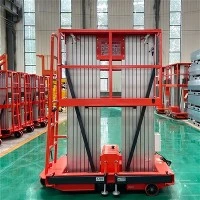
The HLPT-1416 electric scissor lift is a battery-powered slab machine with a maximum working height of 16 meters and a platform capacity of 230kg, configured for indoor and narrow-aisle applications . For fleet operators running HLPT-1416 units, the telematics question is straightforward: does the machine's electrical architecture support the data points that matter, and at what cost?
HuaLi supplies the HLPT-1416 with the electrical system documentation and diagnostic access needed for fleet-level monitoring, and can discuss telematics integration options based on the specific configuration and destination market. Buyers specifying HLPT-1416 units for fleet deployment should raise telematics requirements during the inquiry stage, not after delivery, because the integration path differs depending on whether the machine is ordered with factory telematics preparation or as a standard unit.
What Buyers Should Ask Before Specifying Telematics
The telematics decision should be documented with the same discipline as the equipment specification itself. Four questions separate a useful deployment from an expensive experiment:
Which data points are included, and at what refresh rate? Battery state of charge and fault codes are table stakes. Histogram data for charger performance and granular hours tracking are differentiators. Confirm what is standard versus optional.
Does the system support API integration with existing fleet platforms? If the answer is no, the telematics system becomes another silo. For multi-brand fleets, this is a disqualifying limitation.
What is the retrofit path for existing units? If the fleet includes machines not ordered with telematics preparation, confirm whether retrofit kits exist and what they cost.
Who owns the data, and what happens at contract end? Telematics subscriptions expire. Fleet data should remain accessible and exportable. Buyers should confirm data portability before signing.
As a scissor lift manufacturer, HuaLi supplies the HLPT-1416 with configuration options and diagnostic access suited to fleet operations, and can advise on monitoring approaches matched to the machine's electrical architecture. Contact us with your fleet size, existing telematics platform, and deployment requirements for model-specific recommendations.