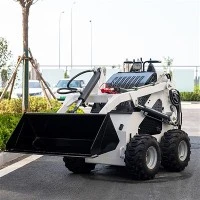

1. Chassis & Ground Contact Performance
Wheel Skid Steer (SSL)
Supported by four rubber tires with high ground pressure. Concentrated load on small contact patches. Excellent traction on hard paved ground but prone to sinking and slipping on mud, sand or loose soil, easily damaging soft ground surfaces.
Tracked Skid Steer (CTL)
Full rubber track design with 3~4 times larger contact area; ground pressure is roughly 1/3 of wheel models. Weight spreads evenly across tracks, rarely sinks in mud, sand or turf, minimal damage to lawn and soft terrain.
2. Travel Speed, Maneuverability & Gradeability
Wheel Type: Max speed 16~19 km/h, fast short-distance relocation with full zero-turn capability. Best on flat ground; max climbing gradient around 12°, easy to skid on slippery slopes.
Track Type: Max speed 11~15 km/h with lower traveling speed. Zero turn is available yet causes severe track abrasion (avoid frequent in practice). Climbing capacity reaches 18°~22°, superior traction on steep, muddy hillsides.
3. Traction & Loading Capacity
Wheel units deliver strong pushing force on hard ground yet suffer tire spinning under heavy loads on soft sites.
Track models gain over 30% higher traction thanks to full ground contact. More stable for heavy lifting, dozing and demolition on uneven terrain with lower rollover risk.
4. Purchase & Maintenance Cost
Purchase Price: Same horsepower tracked loader costs 15%~25% higher than wheel version due to complex undercarriage structure.
Daily Service:
Wheel: Low-cost tire replacement, simple maintenance; vulnerable to punctures on stony sites (solid tires raise extra cost).
Track: Regular track tension adjustment and roller maintenance required. Rubber track replacement costs far exceed four tires; undercarriage wears faster in muddy & rocky conditions, yet tracks outlast tires on lawn & soft ground.
Fuel consumption: Wheel models save fuel for short-distance flat work; tracked machines consume more fuel under off-road heavy-duty conditions.
5. Application Scenarios
Best for Wheel Skid Steer
Municipal road construction, concrete/asphalt pavement, indoor factory jobsite, road sweeping & snow removal, demolition, frequent short-site moving and rental business on hard ground.
Best for Tracked Skid Steer
Landscaping & lawn projects, farmland cultivation, muddy construction sites, riverbank sand land, frozen ground in rainy/snow days, mountain slope works, forest clearing and wetland renovation where ground protection is required.
6. Ground Protection
Wheel models tear lawn and loose topsoil during sharp turns or slipping, leaving obvious tire marks on paved surfaces after hard braking.
Flexible rubber tracks barely leave ruts on turf and green land, the standard option for landscape engineering.